
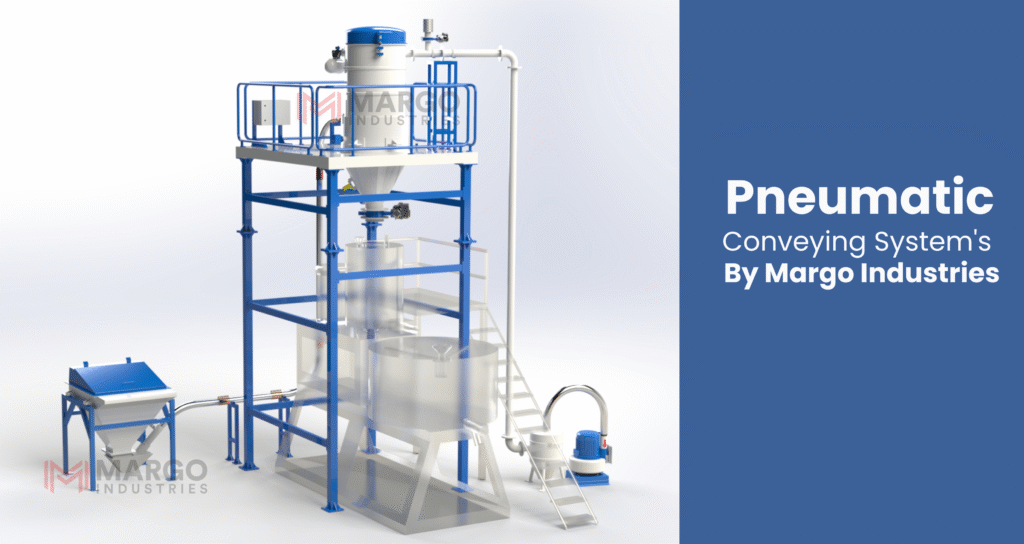
Pneumatic Conveying System manufacturer
In modern industrial environments, efficient material handling plays a critical role in ensuring productivity, safety, and consistent product quality. Across global manufacturing sectors such as chemicals, polymers, pharmaceuticals, food processing, and specialty materials, industries are increasingly shifting toward automated and dust-free conveying solutions. Among all available technologies, the pneumatic conveying system has emerged as one of the most reliable, flexible, and scalable methods for handling bulk solids and powders.
A pneumatic conveying system uses air or gas flow to transport materials through enclosed pipelines from one point to another. This technology is widely adopted in advanced manufacturing plants due to its ability to maintain hygiene, reduce material loss, minimize human intervention, and integrate seamlessly with automated production processes. As industries worldwide move toward smart factories and Industry 4.0 standards, pneumatic conveying systems have become a foundational element of modern material handling strategies.
However, designing and implementing an efficient pneumatic conveying system is not a one-size-fits-all task. Material characteristics, conveying distance, throughput requirements, energy efficiency, safety regulations, and process integration all play a decisive role in determining system performance. Poorly designed systems can lead to blockages, excessive wear, high energy consumption, and inconsistent material flow. This is why industries across the globe seek experienced engineering partners rather than off-the-shelf solutions.
Margo Industries stands as a trusted name in the field of pneumatic conveying systems, offering engineered solutions tailored to the specific needs of diverse industries. With decades of expertise in industrial automation and material handling, Margo Industries delivers pneumatic conveying systems that combine robust engineering, operational efficiency, and long-term reliability. The company focuses on designing systems that not only move material efficiently but also support productivity, safety, and sustainability goals of modern manufacturing plants worldwide.
This comprehensive industrial guide has been developed to provide global buyers, plant managers, engineers, and decision-makers with a clear and practical understanding of pneumatic conveying systems. From basic principles and system types to applications, advantages, selection criteria, and advanced solutions, this guide explains everything required to make informed decisions. Throughout this guide, the emphasis remains on how well-designed pneumatic conveying systems, backed by experienced engineering, can deliver measurable value to industrial operations.
By combining technical expertise with a solution-driven approach, Margo Industries positions itself as a reliable global partner for pneumatic conveying systems, supporting industries in achieving efficient, clean, and future-ready material handling operations.
Introduction to Pneumatic Conveying Systems
In today’s highly competitive manufacturing landscape, efficient material handling is no longer optional—it is essential. Industries around the globe, ranging from chemicals, polymers, and pharmaceuticals to food processing and specialty materials, face significant challenges in moving bulk solids and powders safely, reliably, and cost-effectively. Traditional mechanical conveying methods often fall short due to issues such as spillage, contamination, excessive labor requirements, and limited flexibility. This has led leading manufacturing plants worldwide to adopt pneumatic conveying systems as the preferred solution for modern material handling.
A pneumatic conveying system leverages controlled airflow to transport materials through enclosed pipelines, providing a clean, dust-free, and automated alternative to conventional conveyors. Its adaptability allows it to handle a wide variety of bulk solids, powders, and granular materials across diverse industrial applications. The system ensures consistent material flow, minimizes loss, and significantly reduces manual intervention, thereby enhancing operational efficiency. For global manufacturers, these systems are integral to maintaining high production standards while complying with stringent safety and hygiene regulations.
Automation and smart integration further enhance the value of pneumatic conveying systems. By incorporating sensors, SCADA controls, and advanced monitoring, these systems can optimize material flow, reduce energy consumption, and proactively prevent system downtime. Such capabilities not only streamline plant operations but also align with Industry 4.0 objectives, enabling manufacturers to maintain a competitive edge in international markets.
Margo Industries, with decades of expertise in industrial automation and material handling, has established itself as a trusted global solution provider. Offering customized pneumatic conveying systems designed for reliability, efficiency, and scalability, Margo Industries helps industries worldwide overcome material handling challenges while achieving operational excellence. By combining technical knowledge, engineering precision, and global project experience, Margo Industries ensures that manufacturers receive solutions that are not only effective but also tailored to their unique requirements.
This introduction sets the stage for understanding how pneumatic conveying systems function, their types, components, and applications, highlighting the value they bring to modern manufacturing operations globally.
What is a Pneumatic Conveying System?
A pneumatic conveying system is an advanced material handling solution that uses controlled airflow to transport bulk solids, powders, or granular materials through enclosed pipelines from one location to another. Unlike conventional mechanical conveyors, which rely on belts, rollers, or screw mechanisms, pneumatic systems leverage air or gas flow as the primary medium, making them suitable for industries where hygiene, dust control, and automation are critical.
The core principle of pneumatic conveying involves generating a pressure difference that drives material through a closed pipeline. Materials are introduced into the system via feeders or hoppers, where they mix with the airflow. This mixture is then transported through pipelines to the desired destination, where separation devices such as cyclones, filters, or receivers collect the conveyed material while allowing the air to exit. The controlled environment ensures minimal spillage, reduced contamination risk, and consistent material delivery—an essential requirement for industries such as pharmaceuticals, food processing, chemicals, and polymers.
There are two primary modes of pneumatic conveying: dilute phase and dense phase. In dilute phase systems, the material is suspended in the air stream and transported at high velocity, making it ideal for lightweight powders over long distances. Dense phase systems, on the other hand, move material at lower velocities with higher material-to-air ratios, which is suitable for fragile, abrasive, or heavy materials that require gentle handling. Some systems also operate in a closed-loop configuration, where the airflow is recycled and materials are conveyed in a continuous, contained circuit. This not only improves energy efficiency but also ensures an environmentally friendly and dust-free operation, meeting global safety and regulatory standards.
Compared to mechanical conveying, pneumatic systems offer several advantages that directly appeal to industrial buyers. They allow flexible routing of pipelines, reducing the need for complex layouts and saving floor space. The enclosed design minimizes contamination, spillage, and material degradation, which are common challenges in belt or screw conveyors. Additionally, pneumatic systems can be easily integrated with automated plant controls, including SCADA and IoT monitoring, enabling real-time oversight, predictive maintenance, and optimized operational efficiency.
For global buyers and industrial decision-makers, understanding the fundamentals of pneumatic conveying is critical before making investment decisions. Selecting the right system requires evaluating material characteristics, conveying distance, throughput, and energy efficiency. Partnering with experienced manufacturers, such as Margo Industries, ensures that each system is custom-designed, rigorously tested, and fully compliant with international quality standards, providing a reliable, efficient, and scalable material handling solution for modern industrial operations worldwide.
How Pneumatic Conveying Systems Work
Understanding how pneumatic conveying systems operate is crucial for industrial decision-makers seeking reliable, efficient, and scalable material handling solutions. Pneumatic conveying systems utilize air or gas flow to move bulk solids and powders through enclosed pipelines, offering a clean, automated, and highly flexible alternative to traditional mechanical conveyors. These systems are engineered to maintain consistent material flow, minimize contamination, and optimize energy usage, making them indispensable for modern manufacturing plants worldwide.
Basic Working Principle
At the core of a pneumatic conveying system is the principle of creating a controlled pressure difference to transport materials. Material enters the system through a feed device such as a rotary valve, screw feeder, or hopper. Once introduced, it is carried by a high-velocity air or gas stream through the pipeline to its destination, where it is separated and collected using cyclones, bag filters, or receivers. The system can operate in either a pressure-driven mode—where compressed air pushes materials—or a vacuum-driven mode—where negative pressure draws materials toward the collection point. This flexibility allows industries to handle a wide range of materials, from lightweight powders to dense, fragile solids, with precision and safety.
Airflow and Material Flow Dynamics
The interaction between air and material is critical for smooth operation. In dilute phase conveying, materials are suspended in a high-velocity air stream, which enables transport over long distances and around complex pipeline configurations. Dense phase conveying, conversely, operates at lower velocities with a higher material-to-air ratio, ensuring gentle handling for abrasive, fragile, or heavy materials. Proper engineering calculations determine the optimal airflow rate, pipe diameter, and material feed rate to prevent blockages, minimize wear, and maintain consistent throughput. Advanced systems employ sensors and automation to monitor real-time flow dynamics, allowing adjustments to maintain operational efficiency under varying load conditions.
Role of Pressure and Velocity
Pressure and velocity are the two fundamental parameters that dictate the performance of a pneumatic conveying system. Air pressure provides the driving force required to move material through the pipeline, while velocity ensures the material remains suspended and avoids settling or clogging. A well-designed system balances these parameters according to material characteristics, conveying distance, and throughput requirements. Excessive velocity can lead to material degradation or pipeline wear, whereas insufficient velocity may cause blockages or inconsistent delivery. Leading manufacturers, such as Margo Industries, use precision engineering, simulation tools, and international design standards to optimize pressure and velocity, ensuring high system reliability, reduced maintenance, and energy-efficient operation.
By combining these engineering principles with a focus on automation, safety, and operational efficiency, pneumatic conveying systems provide global industries with a dependable solution for bulk material handling. Choosing an experienced partner like Margo Industries guarantees that systems are custom-engineered, tested, and globally compliant, offering industrial buyers a long-term, high-performance solution capable of meeting the demands of modern manufacturing plants.
Types of Pneumatic Conveying Systems
Pneumatic conveying systems are versatile and adaptable solutions for modern industrial material handling. Understanding the different types of systems is essential for manufacturers and plant managers to select the right solution based on material characteristics, production requirements, and operational goals. The three primary categories are vacuum pneumatic conveying systems, pressure pneumatic conveying systems, and dense phase versus dilute phase conveying systems. Each type offers unique advantages and is suited to specific industrial applications.
Vacuum Pneumatic Conveying System
Working:
A vacuum pneumatic conveying system operates by creating negative pressure at the material collection point, which draws materials from the feed location into the conveying pipeline. Air is evacuated through a vacuum pump or blower, generating a suction effect that transports powders, granules, and lightweight materials. Materials are introduced through a feed port or hopper and travel through the pipeline until they reach a collection receiver, where the airflow is separated from the material. The system is designed to maintain a consistent flow without causing material degradation, making it ideal for fragile or hygroscopic powders.
Advantages:
Dust-free operation, ensuring a clean and safe environment
Gentle handling suitable for fragile or sensitive materials
Reduced risk of material contamination
Flexible installation with complex routing possible
Energy-efficient for short to medium conveying distances
Typical Applications:
Pharmaceutical powders and granules
Food processing materials such as flour, sugar, or starch
Chemical powders that require contamination-free handling
Lightweight polymer powders and resins
When to Choose Vacuum Conveying:
Vacuum systems are ideal when material hygiene, gentle handling, and dust control are critical. They are commonly selected for industries with stringent safety and quality standards or when the material is sensitive to degradation during transport.
Pressure Pneumatic Conveying System
Working:
Pressure pneumatic conveying systems operate by pushing materials through pipelines using compressed air or gas. Material is introduced into the system via a feeder or rotary valve and transported under positive pressure to the receiver. The system can achieve higher throughput rates and cover longer distances compared to vacuum systems. Pressure systems can also handle heavier and denser materials while maintaining consistent material flow.
Advantages:
High throughput capacity suitable for large-scale operations
Efficient transport over long distances
Can handle dense, abrasive, or heavy materials
Integration with automated plant controls for real-time monitoring
Long-distance & High-Capacity Use:
Pressure systems are often employed in industries requiring continuous bulk material transport over extended distances, such as chemical plants, polymer processing units, and large-scale food manufacturing facilities. They are also preferred for applications where system scalability and long-term operational efficiency are important.
Industrial Examples:
Transportation of PVC resin in polymer production
Chemical powders in specialty chemical plants
Food ingredients in industrial bakeries and processing plants
Dense Phase vs Dilute Phase Conveying
Differences:
Dense phase and dilute phase conveying differ primarily in material-to-air ratios and velocity. Dilute phase systems transport materials suspended in a high-velocity air stream, while dense phase systems move materials at a lower velocity with a higher material-to-air ratio. This fundamental difference affects system design, energy usage, and material handling efficiency.
Material Suitability:
Dilute Phase: Ideal for lightweight, non-abrasive powders that can travel at high velocity without degradation.
Dense Phase: Suitable for fragile, abrasive, or heavy materials that require gentle, low-velocity handling.
Energy Efficiency:
Dense phase systems are generally more energy-efficient for heavy materials as they require lower air velocities, reducing power consumption and wear on pipelines. Dilute phase systems are better for long-distance transport of lightweight powders but may consume more energy due to higher airflow requirements.
Global Best Practices:
Leading manufacturers around the world prioritize precise engineering, material-specific customization, and automated monitoring for both dense and dilute phase systems. Key considerations include pipeline diameter, airflow rate, feed consistency, and system automation to ensure reliability, minimize maintenance, and optimize operational efficiency.
By understanding the distinct types of pneumatic conveying systems and their advantages, global buyers and industrial decision-makers can make informed choices based on production needs, material characteristics, and operational goals. Selecting the right system not only ensures efficient and reliable material transport but also enhances plant productivity, safety, and compliance with international standards. Partnering with experienced providers such as Margo Industries guarantees tailored solutions designed to meet the specific requirements of industries worldwide, offering dependable, high-performance, and scalable material handling systems.
Key Components of a Pneumatic Conveying System
A pneumatic conveying system is a complex integration of multiple components, each designed to ensure reliable, efficient, and precise material transport. Understanding these components is essential for industrial decision-makers seeking systems that meet the highest global standards. Margo Industries focuses on engineering excellence and custom solutions, ensuring each component contributes to optimal performance, safety, and operational efficiency.
Blowers / Compressors
Blowers and compressors are the heart of any pneumatic conveying system. They generate the airflow required to move materials through the pipeline by creating either positive pressure or vacuum conditions, depending on the system design. High-quality, energy-efficient blowers and compressors are critical for maintaining consistent airflow, minimizing energy consumption, and ensuring uninterrupted operation. Margo Industries selects and designs these units to match the material characteristics and plant requirements, offering both variable speed options and advanced monitoring capabilities for maximum reliability.
Feeding Systems
The feeding system regulates the introduction of material into the conveying pipeline. Common feeding devices include rotary valves, screw feeders, and hoppers, which ensure a consistent material flow rate while preventing backflow or blockages. Properly engineered feeders are crucial for achieving uniform conveyance and maintaining system efficiency. Margo Industries customizes feeders according to material type, particle size, moisture content, and throughput requirements, providing global buyers with systems optimized for both performance and longevity.
Conveying Pipelines
Pipelines form the physical path through which materials travel. Their diameter, length, and layout are carefully designed based on material characteristics, conveying distance, and velocity requirements. High-quality pipelines are engineered to minimize wear and prevent clogging, with bends and junctions designed to reduce turbulence and maintain smooth material flow. Margo Industries employs precision engineering and advanced simulation tools to ensure that pipeline designs are both efficient and adaptable to complex industrial layouts.
Cyclones & Separators
Cyclones and separators are critical for separating conveyed materials from the conveying air. Cyclones use centrifugal force to collect bulk solids efficiently, while separators can include bag filters, receivers, or multi-stage collection units for fine powders. Proper separation prevents material loss, reduces dust emissions, and enhances product quality. Margo Industries integrates these components with precision, ensuring minimal material degradation and compliance with international safety and environmental standards.
Filters & Dust Collectors
Filters and dust collectors maintain hygiene, safety, and environmental compliance by capturing fine particles and preventing their release into the workplace. High-efficiency bag filters, cartridge filters, or pulse-jet collectors are selected based on material properties and plant requirements. Margo Industries designs filtration systems that not only meet global regulatory standards but also integrate seamlessly with the overall conveying system to maintain consistent airflow and prevent blockages.
Control Panels, Automation & SCADA
Advanced control systems are essential for monitoring and optimizing pneumatic conveying operations. Control panels, PLCs, and SCADA systems enable real-time tracking of airflow, pressure, and material feed rates, allowing predictive maintenance and immediate response to any operational issues. Automation ensures energy-efficient operation, reduces downtime, and supports integration with modern Industry 4.0 plant environments. Margo Industries provides fully integrated, customizable control solutions that enhance reliability, safety, and operational efficiency for industrial buyers globally.
By combining these key components with engineering precision and customization, Margo Industries delivers pneumatic conveying systems that are reliable, scalable, and tailored to meet the specific demands of industries worldwide. Every component is designed to optimize material flow, reduce operational costs, ensure safety, and maintain product integrity, establishing Margo Industries as a trusted global partner for high-performance material handling solutions.
Applications of Pneumatic Conveying Systems Across Industries
Pneumatic conveying systems have become an integral part of modern industrial operations, offering efficient, reliable, and hygienic solutions for handling bulk materials and powders. Their adaptability and precision make them suitable across a wide range of industries, helping global manufacturers achieve operational excellence while maintaining international safety and quality standards. Understanding the applications of these systems is essential for plant managers, engineers, and procurement decision-makers who seek optimized material handling solutions.
Chemical & Specialty Chemicals
In chemical and specialty chemical manufacturing, precise and contamination-free material handling is critical. Pneumatic conveying systems transport powders, granules, and chemical compounds without exposure to the environment, reducing the risk of contamination or spillage. These systems support accurate dosing, consistent flow rates, and integration with automated batching systems. Margo Industries designs chemical conveying systems to comply with international safety standards, handle corrosive or hazardous materials, and maintain operational reliability in high-volume production plants.
PVC & Polymer Processing
PVC, polymer resins, and other plastic powders require careful handling to prevent degradation, dust generation, or product loss. Pneumatic conveying systems are ideal for transferring these materials between silos, mixers, extruders, and storage units. Dense phase and dilute phase conveying options allow processors to select systems based on particle size, fragility, and throughput requirements. Margo Industries provides engineered solutions that optimize material flow, minimize dust, and ensure seamless integration with polymer processing equipment, enhancing overall plant efficiency.
Pharmaceutical Manufacturing
The pharmaceutical industry demands the highest level of hygiene and precision in material handling. Pneumatic conveying systems enable dust-free, closed-loop transport of active pharmaceutical ingredients (APIs), excipients, and powders, ensuring compliance with global regulatory standards such as cGMP and ISO. The systems can be designed for modular flexibility, allowing manufacturers to expand capacity or integrate with automated filling, mixing, and packaging processes. Margo Industries specializes in providing custom-designed pharmaceutical conveying solutions that maintain product integrity and operational safety.
Food & Beverage Processing
Food and beverage industries require conveying systems that maintain hygiene, prevent cross-contamination, and comply with international food safety regulations such as FDA and HACCP. Pneumatic systems transport ingredients like flour, sugar, starch, cocoa, and spices efficiently while minimizing dust generation and material loss. Margo Industries designs these systems with stainless steel pipelines, sanitary fittings, and advanced filtration to meet global food processing standards, ensuring consistent quality and safe operation across production lines.
Pigments & Coatings
Pigments, dyes, and coating powders are often fine, abrasive, and sensitive to environmental exposure. Pneumatic conveying systems offer a closed-loop solution for transferring these materials between storage, mixing, and processing units. The systems prevent product loss, maintain uniform quality, and protect operators from dust inhalation. Margo Industries provides engineered solutions for pigment and coating industries that prioritize durability, precise handling, and compliance with international environmental and safety standards.
Minerals & Bulk Solids
Industries handling minerals, cement, and other bulk solids require robust conveying solutions capable of managing heavy loads over long distances. Dense phase pneumatic conveying systems are particularly suitable for these applications, offering gentle handling to reduce material degradation while maintaining high throughput. Margo Industries designs and implements scalable systems that optimize energy consumption, reduce maintenance requirements, and ensure consistent material delivery, meeting the demands of large-scale industrial operations globally.
By leveraging pneumatic conveying systems across these industries, manufacturers can achieve enhanced efficiency, reduced operational costs, and compliance with international standards. Partnering with an experienced provider like Margo Industries ensures that each system is custom-engineered for material-specific requirements, integrates seamlessly with plant automation, and delivers reliable performance in industrial operations worldwide. For global buyers, this translates into high-quality, future-ready material handling solutions that optimize productivity and operational safety across every stage of production.
Advantages of Pneumatic Conveying Systems
Pneumatic conveying systems have become the preferred choice for modern industries worldwide due to their ability to efficiently transport bulk materials while maintaining high standards of hygiene, safety, and operational efficiency. Understanding these advantages is crucial for industrial decision-makers and global buyers considering investment in material handling solutions.
Dust-Free and Hygienic Operation
One of the primary advantages of pneumatic conveying systems is their enclosed design, which prevents dust emissions and material contamination. This dust-free operation is especially critical in pharmaceutical, food, and chemical industries, where hygiene standards and product integrity are non-negotiable. By minimizing exposure to the environment, these systems ensure compliance with global regulatory standards such as cGMP, FDA, and ISO, safeguarding both product quality and workplace safety.
Reduced Material Loss
Conventional mechanical conveyors often result in spillage and material wastage due to open handling methods. Pneumatic conveying systems, in contrast, transport materials through fully enclosed pipelines, significantly reducing losses. This translates into cost savings for manufacturers, improved resource utilization, and consistent material delivery, which is essential for precise dosing and batch quality in high-value production processes.
Lower Manpower Requirement
Automation is a key benefit of pneumatic conveying systems. By minimizing manual material handling, these systems reduce labor dependency while enhancing operational efficiency. Less manual intervention not only lowers labor costs but also reduces the risk of human error, ensuring consistent material flow and reliability in production operations.
Flexible Plant Layout
Pneumatic conveying systems offer unparalleled flexibility in plant design. Pipelines can be routed around obstacles, across floors, or between multiple buildings without requiring significant structural modifications. This allows manufacturers to optimize floor space, improve workflow efficiency, and expand operations without major infrastructural investments, supporting scalable and future-ready plant layouts.
Improved Safety
Safety is a critical consideration in industrial operations. Pneumatic conveying systems reduce exposure to hazardous, abrasive, or toxic materials by keeping them enclosed during transport. The systems also minimize manual lifting and handling, reducing the risk of injuries. Advanced monitoring and control features further enhance operational safety by providing real-time data on airflow, pressure, and material flow, allowing immediate corrective action if needed.
Easy Integration with Automation Systems
Modern pneumatic conveying systems can seamlessly integrate with plant automation, including PLCs, SCADA, and IoT-based monitoring systems. This integration enables precise control over material flow, predictive maintenance, energy optimization, and real-time process adjustments. For global manufacturers seeking smart, efficient, and Industry 4.0-ready operations, such integration is invaluable in maintaining productivity and competitiveness.
By offering dust-free operation, material savings, labor efficiency, flexible layouts, enhanced safety, and automation integration, pneumatic conveying systems provide tangible benefits that justify investment for industrial buyers. Partnering with Margo Industries ensures that these advantages are fully realized through custom-designed, high-performance systems engineered to meet the diverse needs of industries worldwide, delivering operational excellence and long-term reliability.
Common Challenges in Pneumatic Conveying Systems and Their Solutions
While pneumatic conveying systems provide numerous advantages in industrial material handling, like any engineered solution, they present certain operational challenges if not properly designed or maintained. Global manufacturers and industrial decision-makers need to understand these potential issues and the ways in which they can be mitigated to ensure reliable, efficient, and long-term performance.
Pipeline Blockages
One of the most common issues in pneumatic conveying systems is pipeline blockage or clogging. Blockages often occur when material settles in the pipeline due to incorrect airflow velocity, abrupt bends, or inconsistent feeding rates. This can disrupt production schedules, reduce throughput, and increase maintenance requirements.
Solution: Proper system design is critical. Selecting the correct pipeline diameter, minimizing sharp bends, and ensuring consistent material feed rates can prevent blockages. Margo Industries utilizes advanced simulation tools to model material flow, optimizing pipeline layouts and airflow parameters to achieve uninterrupted operation. Real-time monitoring through SCADA systems further enables immediate detection and corrective action if flow issues arise.
Material Degradation
Some materials, especially fragile powders, polymers, or hygroscopic substances, are prone to degradation when subjected to high-velocity airflow or mechanical stress within the system. Material degradation can impact product quality, batch consistency, and operational efficiency.
Solution: Choosing the appropriate conveying mode—dense phase for gentle handling or dilute phase for high-velocity transport—is essential. Margo Industries customizes system parameters such as airflow rate, velocity, and pipeline configuration according to material characteristics. This ensures minimal abrasion or degradation while maintaining consistent throughput, preserving both product quality and operational efficiency.
High Energy Consumption
Pneumatic conveying systems can become energy-intensive if airflow, velocity, or pressure parameters are not optimized. Excessive energy usage increases operational costs and reduces overall system efficiency, particularly in large-scale or long-distance applications.
Solution: Correct velocity selection, efficient blower and compressor design, and automated control of airflows are key to reducing energy consumption. Margo Industries incorporates energy-optimized components and intelligent control systems, ensuring that each system operates at peak efficiency while meeting production requirements, delivering both cost savings and environmental benefits.
System Wear and Maintenance Issues
Continuous transport of abrasive or heavy materials can lead to pipeline wear, component damage, and increased maintenance demands. Poorly designed systems may also require frequent downtime for repairs, impacting overall productivity.
Solution: High-quality, wear-resistant materials for pipelines, feeders, and separators, combined with predictive maintenance via integrated control systems, help minimize downtime. Margo Industries emphasizes robust engineering, precision fabrication, and component selection tailored to the specific materials being handled, ensuring reliable, long-term performance and minimal maintenance needs.
By addressing these challenges through precise design, optimized velocity selection, advanced automation, and robust material handling solutions, Margo Industries provides industrial buyers with reliable, high-performance pneumatic conveying systems. The company’s focus on engineering excellence, predictive maintenance, and global standards ensures that manufacturers receive systems that maximize uptime, protect product quality, and deliver operational efficiency, making it the preferred choice for buyers worldwide.
How to Select the Right Pneumatic Conveying System
Selecting the appropriate pneumatic conveying system is a critical decision for global manufacturers and industrial buyers. The right system ensures efficient material transport, minimal downtime, and compliance with international safety and hygiene standards. Making an informed choice requires careful consideration of material properties, operational requirements, and plant-specific constraints.
Material Characteristics
The type of material being handled is the most important factor in system selection. Powders, granules, pellets, or fragile materials each require specific handling approaches. Fragile materials may necessitate dense phase conveying to minimize degradation, while lightweight powders may be suited for dilute phase systems. Moisture content, abrasiveness, and chemical reactivity also influence material compatibility with pipeline materials and separators. Margo Industries evaluates these factors to design systems tailored to the specific material being conveyed.
Particle Size and Density
Particle size and bulk density affect the airflow requirements, velocity, and pressure needed for efficient transport. Fine powders may require controlled airflow and specialized filtration to prevent clogging, whereas coarse or dense particles demand robust feeders and pipelines to ensure continuous flow. Correctly sizing these parameters reduces material degradation, wear, and energy consumption. Margo Industries performs precise calculations and simulations to match system specifications with material characteristics.
Conveying Distance
The distance over which material must be transported significantly impacts system type selection. Vacuum systems are suitable for short to medium distances, while pressure systems or dense phase systems are more effective for long-distance transport or multi-floor plant layouts. Proper consideration of distance ensures consistent throughput and reduces energy costs over the system’s operational life.
Capacity Requirements
Throughput requirements dictate system size, airflow rates, and feeder selection. High-capacity operations may require multiple blowers, larger pipelines, or combined dense and dilute phase sections. Margo Industries works closely with global buyers to match capacity needs, ensuring scalability and reliability for continuous production environments.
Environmental Conditions
Plant conditions such as temperature, humidity, and exposure to corrosive or abrasive materials influence system design and material selection. Enclosed systems with corrosion-resistant pipelines or stainless steel construction may be necessary in specific industries like pharmaceuticals, food processing, or chemicals. Margo Industries integrates these considerations into custom system designs to maintain durability, hygiene, and operational efficiency.
Energy Efficiency Goals
Energy consumption is a critical consideration for industrial buyers seeking cost-effective operations and sustainability compliance. Selecting optimal airflow, velocity, and blower efficiency can significantly reduce energy use while maintaining reliable material transport. Margo Industries leverages advanced engineering and automation to optimize energy efficiency without compromising performance.
By carefully evaluating material properties, particle size, distance, capacity, environmental conditions, and energy efficiency goals, global buyers can select pneumatic conveying systems that deliver maximum operational reliability, safety, and cost-effectiveness. Partnering with Margo Industries ensures access to custom-engineered solutions designed to meet these criteria, providing long-term, high-performance material handling systems that support global industrial operations.
Customized Pneumatic Conveying Solutions by Margo Industries
In today’s global industrial landscape, one-size-fits-all solutions rarely meet the precise requirements of modern manufacturing operations. Margo Industries has established itself as a trusted leader in providing customized pneumatic conveying systems that address the unique needs of industries worldwide, combining engineering expertise, global manufacturing standards, and turnkey project execution capabilities.
Engineering Consultation
Every successful pneumatic conveying project begins with in-depth engineering consultation. Margo Industries works closely with plant managers, process engineers, and industrial buyers to understand material characteristics, production capacity, environmental conditions, and operational objectives. This collaborative approach ensures that every system recommendation is tailored to the client’s specific challenges, maximizing efficiency, reliability, and return on investment.
Custom System Design
Following the consultation, Margo Industries designs bespoke pneumatic conveying systems that align with the client’s requirements. System components—including feeders, pipelines, blowers, cyclones, and automation controls—are engineered for optimal performance, taking into account particle size, density, throughput, and conveying distance. Both dense phase and dilute phase systems are customized to ensure material integrity, energy efficiency, and compliance with international safety and hygiene standards.
Manufacturing Standards
Margo Industries adheres to global manufacturing standards to deliver durable, reliable, and high-performance systems. Components are fabricated using precision engineering techniques, high-quality materials, and industry-approved welding and assembly processes. The company ensures that all systems meet international quality certifications, including ISO standards, and are fully compliant with global safety, environmental, and operational regulations.
Testing and Quality Control
Before deployment, each system undergoes rigorous testing and quality control protocols. Performance tests, airflow and pressure calibration, and material handling simulations ensure that the system meets design specifications. This proactive quality assurance minimizes commissioning issues, reduces operational downtime, and guarantees that global buyers receive a system capable of long-term, reliable service.
Installation and Commissioning
Margo Industries provides end-to-end installation and commissioning services, ensuring seamless integration into existing plant infrastructure. Skilled engineers supervise system installation, pipeline routing, automation integration, and initial operational testing. Training is provided to plant personnel to enable smooth operation and maintenance, ensuring that the system delivers maximum productivity from day one.
Global Project Execution Capability
With experience in executing projects across continents, Margo Industries has demonstrated its ability to manage complex, large-scale installations for multinational clients. From initial consultation to final commissioning, the company ensures consistent quality, timely delivery, and compliance with local and international standards. This global capability reinforces Margo Industries’ reputation as a reliable partner for industrial buyers seeking customized, high-performance pneumatic conveying solutions.
By combining engineering consultation, custom system design, stringent manufacturing standards, rigorous testing, and global project execution, Margo Industries delivers pneumatic conveying systems that are tailored, efficient, and reliable. For industrial decision-makers, this translates into a trusted solution that enhances productivity, ensures operational safety, and establishes Margo Industries as a global leader in material handling solutions.
Why Margo Industries is a Trusted Global Pneumatic Conveying System Manufacturer
Selecting a reliable partner for pneumatic conveying solutions is critical for industrial operations worldwide. Margo Industries has earned its reputation as a trusted global manufacturer by combining decades of engineering expertise with industry-specific innovation, energy-efficient designs, and a strong commitment to quality and customer success. For global buyers, these attributes translate into high-performance, reliable, and scalable material handling systems that drive operational excellence.
Decades of Engineering Expertise
With decades of experience in designing and delivering pneumatic conveying systems, Margo Industries brings unparalleled engineering knowledge to every project. The company has handled a diverse range of materials, from fragile pharmaceutical powders to abrasive minerals, providing solutions tailored to unique industrial requirements. This deep technical expertise ensures systems are optimized for performance, reliability, and long-term durability.
Industry-Specific Solutions
Margo Industries understands that every industry has unique material handling needs. Whether it is chemicals, polymers, pharmaceuticals, food processing, pigments, or bulk solids, the company designs systems that meet precise operational, safety, and regulatory requirements. By offering custom-engineered solutions, Margo Industries ensures that industrial buyers receive systems that are perfectly aligned with their process needs, delivering maximum efficiency and minimizing operational challenges.
Automation and Industry 4.0 Readiness
Modern industrial plants demand automation and real-time monitoring for efficient operations. Margo Industries integrates advanced PLC, SCADA, and IoT-enabled control systems into its pneumatic conveying solutions. This Industry 4.0-ready approach allows global buyers to monitor material flow, optimize energy use, detect potential issues before they impact production, and achieve seamless integration with existing plant automation.
Energy-Efficient Designs
Operational efficiency is a priority for manufacturers worldwide. Margo Industries focuses on energy-optimized pneumatic conveying systems that reduce power consumption without compromising material flow or system reliability. Through careful selection of blowers, compressors, and airflow parameters, these systems offer both cost savings and sustainability benefits, making them ideal for large-scale, environmentally-conscious industrial operations.
International Quality Standards
Quality and compliance are non-negotiable for global buyers. Margo Industries adheres to international standards, including ISO certifications, ensuring that every system is built to last, performs reliably under demanding conditions, and meets global safety, environmental, and hygiene regulations. This commitment to quality establishes trust and reliability for industrial clients worldwide.
Long-Term Service and Support
Margo Industries goes beyond delivering equipment by providing comprehensive service and support throughout the lifecycle of the system. From installation and commissioning to maintenance, spare parts, and troubleshooting, the company ensures uninterrupted operation and long-term reliability, giving global buyers confidence in their investment.
Global Customer Mindset
With projects executed across continents, Margo Industries understands the needs of diverse global customers. The company combines local compliance expertise with international best practices, offering turnkey solutions that deliver performance, reliability, and efficiency for industrial operations of any scale.
By combining decades of engineering expertise, industry-specific customization, automation readiness, energy efficiency, stringent quality standards, and long-term support, Margo Industries emerges as a trusted global partner for pneumatic conveying systems. Industrial buyers worldwide can rely on Margo Industries to deliver high-performance, scalable, and reliable solutions that enhance operational efficiency, ensure safety, and provide measurable return on investment.
Pneumatic Conveying System Manufacturer and Supplier for Global Industries
Margo Industries has established itself as a leading global manufacturer and supplier of pneumatic conveying systems, delivering high-performance solutions to industrial clients across continents. With a strong focus on engineering excellence, international compliance, and turnkey project execution, the company serves as a reliable partner for manufacturers seeking efficient, scalable, and export-ready material handling systems.
Global Supplier with Worldwide Projects
From Asia to Europe, the Americas, and beyond, Margo Industries has executed projects across diverse geographies, catering to the specific needs of chemical, pharmaceutical, food, polymer, pigments, and bulk solid industries. The company’s global footprint demonstrates its ability to manage complex installations while adhering to international standards, timelines, and quality expectations. By partnering with Margo Industries, industrial buyers gain access to proven solutions trusted worldwide.
Export-Ready Systems
Margo Industries designs pneumatic conveying systems with global shipping and installation in mind, ensuring that every component is robust, modular, and suitable for export. Systems are packaged and documented according to international standards, facilitating smooth logistics and rapid deployment. This export-ready approach ensures minimal downtime during installation and allows global buyers to achieve operational efficiency quickly.
Compliance with International Standards
Quality, safety, and regulatory compliance are critical for global operations. Margo Industries adheres to ISO-certified manufacturing processes, international safety regulations, and environmental guidelines, ensuring that every system meets or exceeds global benchmarks. This commitment guarantees that buyers receive material handling systems that are reliable, safe, and aligned with international industry best practices.
Trusted Global Partner
By combining engineering expertise, international compliance, export-ready design, and successful project execution worldwide, Margo Industries positions itself as a trusted global partner for industrial material handling solutions. Whether for large-scale manufacturing plants or specialized process lines, the company delivers pneumatic conveying systems that optimize material flow, enhance operational efficiency, and provide long-term reliability for industrial buyers worldwide.
Frequently Asked Questions (FAQs)
Margo Industries understands that global buyers have specific questions when considering pneumatic conveying systems. Here, we address some of the most common queries to help industrial decision-makers make informed choices.
1. What is the cost of a pneumatic conveying system?
The cost of a pneumatic conveying system varies depending on material characteristics, throughput capacity, conveying distance, system type (dense phase or dilute phase), and customization requirements. Margo Industries provides tailor-made solutions and prepares detailed quotes based on the client’s exact operational needs. Investing in a high-quality system ensures long-term reliability, energy efficiency, and minimal maintenance, offering significant value over the system’s lifecycle.
2. Vacuum vs. Pressure Conveying: Which is better?
Both vacuum and pressure conveying systems have specific advantages. Vacuum systems are ideal for short to medium distances, delicate materials, and dust-free handling. Pressure systems are suitable for long-distance transport, high-capacity operations, and materials requiring gentle yet continuous flow. Margo Industries evaluates material properties, plant layout, and production requirements to recommend the most effective system type for global buyers.
3. How energy-efficient are pneumatic conveying systems?
Pneumatic conveying systems are designed for energy efficiency when correctly engineered. Factors such as airflow rate, system velocity, and blower/compressor selection directly impact energy consumption. Margo Industries incorporates energy-optimized components, advanced control systems, and automation, enabling buyers to achieve reduced operational costs while maintaining reliable performance.
4. Can systems be customized for different materials?
Yes. Margo Industries specializes in custom pneumatic conveying solutions for a wide range of materials, including powders, granules, polymers, pharmaceuticals, food ingredients, pigments, and bulk solids. Systems are designed with material-specific pipelines, feeders, cyclones, and filters to ensure product integrity, reduce material degradation, and maintain consistent throughput.
5. What are the maintenance requirements?
Maintenance requirements depend on the material handled and the system configuration. Regular inspection of blowers, feeders, pipelines, and filters, along with monitoring of airflow and pressure, ensures optimal performance. Margo Industries provides comprehensive maintenance support and predictive monitoring, minimizing downtime and extending system life for global operations.
6. What are the global installation timelines?
Installation timelines vary depending on system complexity, customization level, and site-specific conditions. Margo Industries manages end-to-end project execution, including engineering, fabrication, shipping, installation, and commissioning. Typical timelines are communicated upfront, and the company ensures on-time delivery and seamless integration for industrial plants worldwide.
By addressing these key questions, Margo Industries helps global buyers make confident decisions, ensuring that pneumatic conveying systems are reliable, energy-efficient, fully compliant, and tailored to specific operational needs. This FAQ section also enhances SEO visibility, providing content that matches high buyer intent search queries globally.
Conclusion
Pneumatic conveying systems are essential for modern industries seeking efficient, safe, and reliable material handling solutions. They offer numerous benefits, including dust-free operation, reduced material loss, lower manpower requirements, flexible plant layouts, and seamless integration with automation systems. By leveraging these advantages, global manufacturers can achieve enhanced productivity, energy efficiency, and compliance with international safety and hygiene standards.
Margo Industries has positioned itself as a trusted global leader in pneumatic conveying solutions. With decades of engineering expertise, industry-specific customization, and adherence to international quality standards, the company delivers systems that meet the unique needs of diverse sectors, including chemicals, pharmaceuticals, food processing, polymers, pigments, and bulk solids. Each system is engineered for reliability, scalability, and long-term operational efficiency, reinforcing Margo Industries’ authority as a preferred partner for industrial buyers worldwide.
Looking ahead, Margo Industries is committed to providing future-ready solutions that integrate advanced automation, energy-optimized designs, and Industry 4.0 capabilities. This forward-thinking approach ensures that clients receive not only high-performance material handling systems today but also systems that are adaptable to evolving industrial requirements, global regulatory standards, and sustainability goals.
For global buyers seeking customized, reliable, and technologically advanced pneumatic conveying solutions, Margo Industries offers the expertise, quality, and support necessary to maximize operational efficiency and secure a competitive edge in their industries.