
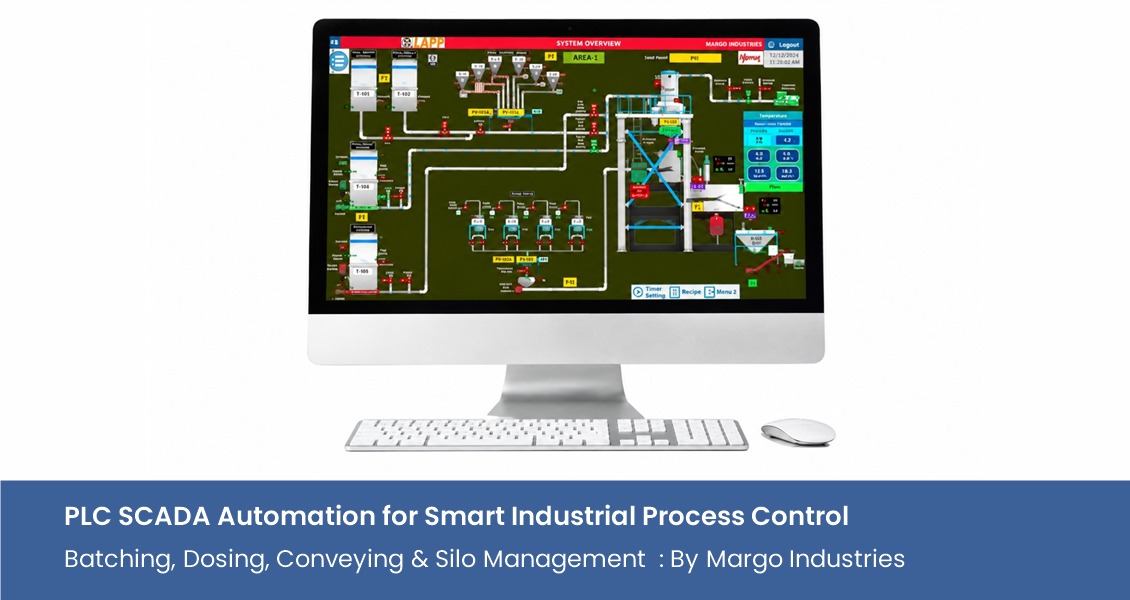
PLC SCADA Automation : Smart Industrial Process Control for Better Productivity, Accuracy & Visibility
Margo Industries provides PLC SCADA Automation solutions that connect industrial equipment and processes through a centralized control system. Our automation solutions help manufacturers monitor operations, control equipment, manage recipes, track production data, and improve process consistency.
From material handling and pneumatic conveying to batching, weighing, dosing, mixing, and silo management, Margo Industries develops customized PLC and SCADA-based automation systems according to the plant process and application requirements.
What is PLC SCADA Automation?
PLC SCADA Automation combines two important technologies used in industrial automation: PLC (Programmable Logic Controller) and SCADA (Supervisory Control and Data Acquisition).
A PLC controls machines and equipment according to programmed logic. SCADA provides a visual interface where operators can monitor the process, view equipment status, manage alarms, check production information, and access process data.
In a typical industrial automation system:
Sensors → PLC → Equipment Control → SCADA/HMI → Operator
This allows different machines and processes to work together through a coordinated automation system.
How Does a PLC SCADA System Work?
A PLC SCADA system continuously collects information from connected machines, sensors, instruments, and process equipment.
Step 1 – Data Collection
Sensors and field devices collect information such as:
- Material level
- Weight
- Temperature
- Pressure
- Flow
- Motor status
- Valve position
- Equipment condition
Step 2 – PLC Processing
The PLC control system receives these signals and processes them according to predefined logic, sequences, recipes, and safety conditions.
Step 3 – Equipment Control
Based on the programmed logic, the PLC controls equipment such as:
- Conveyors
- Valves
- Pumps
- Feeders
- Motors
- Weighing systems
- Dosing systems
- Mixers
- Silo systems
Step 4 – SCADA Monitoring
The SCADA system displays the process on a centralized interface. Operators can see the current status of equipment and process parameters in real time.
Step 5 – Alarms & Reports
If an abnormal condition occurs, the system can generate alarms. Production information can also be stored for reporting, analysis, and process tracking.
PLC vs SCADA: What is the Difference?
| PLC | SCADA |
|---|---|
| Controls machines and processes | Monitors and supervises processes |
| Executes programmed logic | Displays process information |
| Works with sensors and field devices | Provides operator interface |
| Controls motors, valves, feeders, etc. | Shows equipment status and alarms |
| Handles real-time control | Provides monitoring, reporting and data visualization |
Simply put: PLC controls the process, while SCADA helps operators monitor and supervise the process.
What Can Margo's PLC SCADA Automation System Control?
Margo Industries can integrate PLC and SCADA automation with different material handling and process systems depending on the plant requirement.
Material Handling Automation
Automated movement of powders, granules, and bulk materials through connected conveying and feeding systems.
Pneumatic Conveying
PLC-based control of vacuum conveying, pressure conveying, and other pneumatic conveying operations.
Automatic Batch Weighing
Recipe-based weighing and batching of multiple raw materials with controlled sequences and tolerance settings. Margo’s Automatic Batch Weighing System uses PLC/SCADA-based logic for multi-ingredient recipe handling.
Dosing & Feeding
Control of powder, liquid, and minor ingredient dosing according to predefined process requirements.
Mixer Automation
Automated control of material feeding and mixer operation for consistent batch production.
Silo Management
Monitoring of material levels and integration of storage silos with conveying and feeding systems.
Recipe Management
Store and select production recipes and control ingredient sequences through the automation system.
Key Features of PLC SCADA Automation
Real-Time Process Monitoring
Monitor equipment and process conditions through a centralized SCADA interface.
Automated Process Control
PLC-based logic controls machines according to predefined sequences and operating conditions.
Recipe Management
Create, store, select, and manage production recipes for repeatable processing.
Alarm Management
Receive alerts when abnormal conditions, equipment faults, or process deviations occur.
Production Reports
Track production information and process data for better analysis and traceability.
HMI Integration
A user-friendly HMI allows operators to monitor and control connected equipment.
Remote Monitoring
SCADA-based systems can provide remote access and diagnostics where the system architecture supports it.
Safety Interlocks
Interlocks can prevent equipment operation when predefined safety or process conditions are not met.
Benefits of PLC SCADA Automation
Reduce Manual Operations
Automating repetitive processes reduces dependency on manual operation and helps maintain consistent process sequences.
Improve Process Accuracy
Automated weighing, dosing, feeding, and recipe control can improve consistency between batches.
Better Production Visibility
Operators can view important process information from a centralized interface instead of checking individual machines manually.
Reduce Process Errors
Automated sequences, alarms, interlocks, and recipe controls help reduce avoidable operating errors.
Improve Traceability
Production and process information can be recorded for reporting and analysis.
Easy System Integration
PLC SCADA automation can connect multiple machines and processes into a coordinated plant automation system.
Scalable Automation
The system can be designed according to the current plant requirement and expanded as production requirements increase.
PLC SCADA Automation for Material Handling
For industries handling powders, granules, additives, and other bulk materials, automation becomes especially important because several processes may need to work together.
For example:
Raw Material Storage → Conveying → Weighing → Dosing → Mixing → Feeding → Production
Margo Industries can integrate these stages into a coordinated industrial automation system, allowing material movement, weighing, dosing, and process control to work through a centralized PLC SCADA system.
This approach is particularly relevant for PVC, plastics and polymer compounding, chemicals, pharmaceuticals, food processing, and other bulk material handling applications.
Industries We Serve
Plastics & Polymer Industry
Automation for raw material handling, batching, dosing, mixing, and feeding.
PVC Industry
PLC SCADA automation for material conveying, batching, recipe handling, and centralized material handling.
Chemical Industry
Controlled material transfer, dosing, weighing, batching, and process monitoring.
Pharmaceutical Industry
Automated material handling and controlled process operations where accuracy and traceability are important.
Food & Beverage Industry
Automated weighing, dosing, conveying, and recipe-based production processes.
Why Choose Margo Industries for PLC SCADA Automation?
Automation Backed by Process Engineering
Margo Industries combines industrial automation with material handling and process engineering. With 50+ years of engineering experience, Margo designs customized automation solutions for industrial applications across conveying, weighing, dosing, feeding, mixing, storage, and plant automation, allowing different process stages to be integrated into one automation system.
From Material Handling to Complete Plant Automation
Margo Industries can integrate PLC SCADA Automation with:
- Pneumatic Conveying Systems
- Vacuum Conveying Systems
- Pressure Conveying Systems
- Automatic Batch Weighing Systems
- Powder & Liquid Dosing Systems
- Automatic Mixer Feeding Systems
- Raw Material & Recipe Silos
- Screw Conveyors
- Bulk Bag Unloading Systems
- Recipe Management Systems
- Process Control Systems
This creates a connected industrial automation system instead of operating each machine separately. See it in practice in our Fully Automatic Compounding Plant with PLC & SCADA System.
Frequently Asked Questions (FAQs)
Q1: What is PLC SCADA Automation?
PLC SCADA Automation combines PLC-based machine control with SCADA-based monitoring and supervision to manage industrial processes from a centralized system.
Q2: What is the role of PLC in industrial automation?
A PLC receives signals from sensors and controls connected equipment according to programmed logic and process requirements.
Q3: What is the role of SCADA?
SCADA provides real-time process visualization, monitoring, alarms, data collection, and reporting for industrial operations.
Q4: Can PLC and SCADA control material handling systems?
Yes. PLC and SCADA can be integrated with conveying, weighing, dosing, feeding, silo, and other material handling systems.
Q5: Can Margo customize PLC SCADA Automation?
Yes. Margo Industries develops automation solutions based on the plant process, equipment, production requirements, and level of automation required.