
Material handling is typically a behind-the-scenes activity in most industries. However, when this process is not running smoothly, it can have serious repercussions throughout all other processes within an organization.
When there is inefficiency in material handling, issues such as dust contamination and product loss during transfer, as well as frequent need for maintenance, are common. This leads to higher costs and reduced productivity over time.
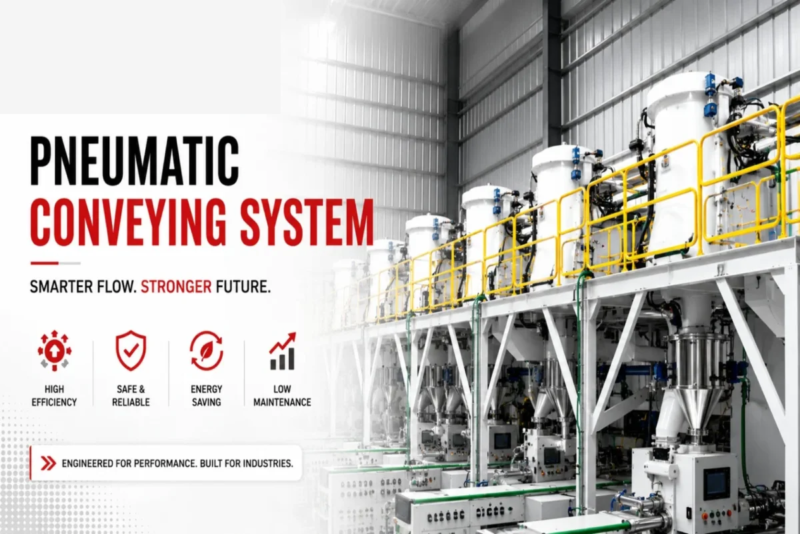
Pneumatic conveying systems provide an effective solution to these problems by allowing for cleaner and more controlled transfer of bulk materials throughout your facility.
Margo Industries delivers reliable, industry-specific solutions that enhance material handling efficiency and convert routine operations into high-performance, cost-effective processes.
What is a Pneumatic Conveying System?
Pneumatic Conveying system moves bulk materials (ex. powder, granules, dry solids) along pipes via the use of air pressure or vacuum.
Airflow moves materials through these pipes; this way, there is less dust, loss of material, and manual labor.
In other words, material is moved within pipes using moving air.
How Do Pneumatic Conveying Systems Work?
The way that the system operates is straightforward and effective, using material supplied by means of a hopper as input for the system. By generating air pressure/vacuum, the material is moved along a closed pipe system from point A to point B, where the material can then be separated/collected.
The system’s enclosed nature helps to preserve the cleanliness of the material being transferred and reduces waste during transportation.
Vacuum vs Pressure Conveying System
Aspect |
Vacuum Conveying System |
Pressure Conveying System |
| Introduction | A vacuum conveying system is used to safely and cleanly transfer materials by pulling them through pipelines using suction. It is ideal where hygiene and dust control are important. | A pressure conveying system is used to move large quantities of materials quickly by pushing them through pipelines using air pressure. It is ideal for bulk handling over longer distances. |
| How It Works | Uses suction (negative pressure) to pull material from one point to another | Uses air pressure (positive pressure) to push material through pipes |
| Where It Is Used | Food industry (flour, sugar, spices), Pharma, Chemical powders | Cement industry, Chemicals, Plastics, Bulk material handling |
| Why It Is Used | For clean, dust-free, and contamination-free transfer | For fast, long-distance, and bulk material transfer |
| Distance | Best for short to medium distances | Suitable for long distances |
| Material Type | Fragile, lightweight, fine powders and hygiene-sensitive materials | Heavy, abrasive, dense and high-volume bulk materials |
| Cleanliness | Fully enclosed dust-free conveying with high hygiene standards | Good dust control but comparatively less hygienic than vacuum systems |
| Main Benefit | Clean, safe, and controlled handling | High speed and efficient bulk transfer |
Key Advantages
- Workplace is cleaner and free of debris
- Material waste is minimized
- Lower overall cost for maintenance
- Increased productivity and efficiency
- Flexible options in system design
- Minimal Manpower depandcy
Where Is Pneumatic Conveying System Utilized?
Pneumatic conveying systems are utilized in multiple industries including:
- Plastic and packaging Industries
- Cement manufacturing
- Food processing
- Pharmaceutical manufacturing
- Chemical manufacturing
Does Your Plant’s System Restrict Your Working Performance?
Should your factory encounter any dust issues, leakages of material during machine stoppages, then the material handling system could be the cause of those issues.
Implementing an upgrade from a mechanical conveying mechanism to a pneumatic conveying mechanism could assist in the resolution of these operational challenges and will improve efficiency and productivity.
Why Choose Margo Industries?
At Margo Industries, we specialize in delivering customized material handling and automation solutions designed to meet your specific process requirements and industry standards.
With decades of expertise in pneumatic conveying and bulk material handling, we provide reliable, energy-efficient, and high-performance systems that help improve operational productivity, reduce material loss, and ensure smooth plant operations.
Our Solutions Include:
• Vacuum Conveying Systems
• Pressure Conveying Systems
Our goal is to deliver dependable and efficient conveying solutions that enhance your plant performance, optimize workflow, and support long-term operational excellence.
Need to Talk About Your Needs?
Whether you are working on a new project or upgrading an existing conveyance system, making the proper choice from the beginning will ensure you have the best solution available. Choosing the right pneumatic conveying systems will help improve efficiency and long-term performance.
Provide your request to Margo Industries, so that we can create a custom solution for your requirements and maximize your plant’s performance.
Frequently Asked Questions
- What is a pneumatic conveying system?
A pneumatic conveying system uses air pressure or vacuum to move bulk materials through pipes, providing an efficient and clean process for handling bulk material.
- What is the difference between vacuum conveying and pressure conveying?
Vacuum conveying uses suction to pull material and is suitable for applications requiring a high degree of cleanliness and contamination-free handling.
Pressure conveying uses compressed air to push material through pipelines and is suitable for transporting materials over long distances and for high-capacity bulk material handling applications.
- What are some of the advantages of pneumatic conveying systems?
Pneumatic conveying systems have many advantages including the reduction of airborne dust, low material loss, reduced maintenance costs, reduced dependency on manual labour, and improved overall operational efficiency.
- What industries use these systems?
Pneumatic conveying systems are typically found in the food, pharmaceuticals, chemicals, and plastics industries.
- Is it possible to customize the Pneumatic Conveying Systems?
Yes, the systems can be made according to your type of material, size, and layout. Margo Industries provides customized solutions.
- Are Pneumatic Conveying Systems exported?
Yes, Margo Industries exports pneumatic conveying systems across Africa and the Middle East, as well as to various other countries, delivering reliable solutions to clients worldwide.
- What is the process for getting a quote on Pneumatic Conveying Systems?
Share with us your type of material, required capacity, and distance to determine the proper solution for you and receive a quote.
In summary
In today’s competitive industrial environment, efficient material handling is no longer optional—it is essential for smooth operations and long-term growth. Pneumatic conveying systems offer a smarter, cleaner, and more reliable way to handle bulk materials while reducing dust, waste, and manual effort.
By upgrading to a modern pneumatic conveying solution, industries can improve productivity, maintain product quality, and lower operational costs. Whether you are setting up a new plant or upgrading an existing system, choosing the right conveying solution can make a significant difference in your overall performance.
At Margo Industries, we understand that every application is different. That’s why we provide customized Pressure conveying systems and vacuum conveying systems designed to meet your exact requirements. With our experience and global expertise, we help businesses achieve efficient, reliable, and future-ready material handling solutions.
If you are looking to improve your plant performance and reduce handling challenges, now is the right time to switch to advanced pneumatic conveying systems.