
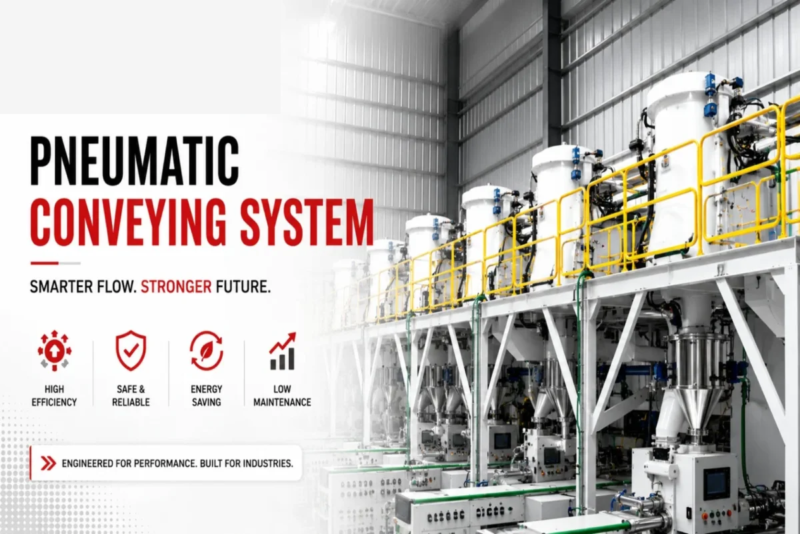
The Future of Bulk Material Handling: Why Pneumatic Conveying System is a Game Changer in Modern Industries

Material handling is typically a behind-the-scenes activity in most industries. However, when this process is not running smoothly, it can have serious repercussions throughout all other processes within an organization.

When there is inefficiency in material handling, issues such as dust contamination and product loss during transfer, as well as frequent need for maintenance, are common. This leads to higher costs and reduced productivity over time.

Pneumatic conveying  systems  provide an effective solution to these problems by allowing for cleaner and more controlled transfer of bulk materials throughout your facility.

Margo Industries delivers reliable, industry-specific solutions that enhance material handling efficiency and convert routine operations into high-performance, cost-effective processes.

What is a Pneumatic Conveying System?

Pneumatic Conveying system moves bulk materials (ex. powder, granules, dry solids) along pipes via the use of air pressure or vacuum.

Airflow moves materials through these pipes; this way, there is less dust, loss of material, and manual labor.

In other words, material is moved within pipes using moving air.

How Do Pneumatic Conveying Systems Work?

The way that the system operates is straightforward and effective, using material supplied by means of a hopper as input for the system. By generating air pressure/vacuum, the material is moved along a closed pipe system from point A to point B, where the material can then be separated/collected.

The system’s enclosed nature helps to preserve the cleanliness of the material being transferred and reduces waste during transportation.

Vacuum vs Pressure Conveying System  

Aspect    

Vacuum Conveying System 

Pressure Conveying System 

Introduction A vacuum conveying system is used to safely and cleanly transfer materials by pulling them through pipelines using suction. It is ideal where hygiene and dust control are important.  A pressure conveying system is used to move large quantities of materials quickly by pushing them through pipelines using air pressure. It is ideal for bulk handling over longer distances. 
How It Works Uses suction (negative pressure) to pull material from one point to another  Uses air pressure (positive pressure) to push material through pipes 
Where It Is Used Food industry (flour, sugar, spices), Pharma, Chemical powders Cement industry, Chemicals, Plastics, Bulk material handling
Why It Is Used For clean, dust-free, and contamination-free transfer For fast, long-distance, and bulk material transfer
Distance Best for short to medium distances Suitable for long distances
Material Type Fragile, lightweight, fine powders and hygiene-sensitive materials Heavy, abrasive, dense and high-volume bulk materials
Cleanliness Fully enclosed dust-free conveying with high hygiene standards  Good dust control but comparatively less hygienic than vacuum systems 
Main Benefit Clean, safe, and controlled handling High speed and efficient bulk transfer

Key Advantages

  • Workplace is cleaner and free of debris
  •  Material waste is minimized
  • Lower overall cost for maintenance
  • Increased productivity and efficiency
  • Flexible options in system design
  • Minimal Manpower depandcy

Where Is Pneumatic Conveying System Utilized?

Pneumatic conveying systems are utilized in multiple industries including:

  • Plastic and packaging Industries
  • Cement manufacturing
  • Food processing
  • Pharmaceutical manufacturing
  • Chemical manufacturing

Does Your Plant’s System Restrict Your Working Performance?

Should your factory encounter any dust issues, leakages of material  during machine stoppages, then the material handling system could be the cause of those issues.

Implementing an upgrade from a mechanical conveying mechanism to a pneumatic conveying mechanism could assist in the resolution of these operational challenges and will improve efficiency and productivity.

Why Choose Margo Industries?

At Margo Industries, we specialize in delivering customized material handling and automation solutions designed to meet your specific process requirements and industry standards.

With decades of expertise in pneumatic conveying and bulk material handling, we provide reliable, energy-efficient, and high-performance systems that help improve operational productivity, reduce material loss, and ensure smooth plant operations.

Our Solutions Include:
• Vacuum Conveying Systems
• Pressure Conveying Systems

Our goal is to deliver dependable and efficient conveying solutions that enhance your plant performance, optimize workflow, and support long-term operational excellence.

Need to Talk About Your Needs?

Whether you are working on a new project or upgrading an existing conveyance system, making the proper choice from the beginning will ensure you have the best solution available. Choosing the right pneumatic conveying systems will help improve efficiency and long-term performance.

Provide your request to Margo Industries, so that we can create a custom solution for your requirements and maximize your plant’s performance.

Frequently Asked Questions

  1. What is a pneumatic conveying system?

A pneumatic conveying system uses air pressure or vacuum to move bulk materials through pipes, providing an efficient and clean process for handling bulk material.

  1. What is the difference between vacuum conveying and pressure conveying?

Vacuum conveying uses suction to pull material and is suitable for applications requiring a high degree of cleanliness and contamination-free handling.

Pressure conveying uses compressed air to push material through pipelines and is suitable for transporting materials over long distances and for high-capacity bulk material handling applications

  1. What are some of the advantages of pneumatic conveying systems?

Pneumatic conveying systems have many advantages including the reduction of airborne dust, low material loss, reduced maintenance costs, reduced dependency on manual labour, and improved overall operational efficiency. 

  1. What industries use these systems?

Pneumatic conveying systems are typically found in the food, pharmaceuticals, chemicals, and plastics industries.

  1. Is it possible to customize the Pneumatic Conveying Systems?

Yes, the systems can be made according to your type of material, size, and layout. Margo Industries provides customized solutions.

  1. Are Pneumatic Conveying Systems exported?

Yes, Margo Industries exports pneumatic conveying systems across Africa and the Middle East, as well as to various other countries, delivering reliable solutions to clients worldwide.

  1. What is the process for getting a quote on Pneumatic Conveying Systems?

Share with us your type of material, required capacity, and distance to determine the proper solution for you and receive a quote.

In summary

In today’s competitive industrial environment, efficient material handling is no longer optional—it is essential for smooth operations and long-term growth. Pneumatic conveying systems offer a smarter, cleaner, and more reliable way to handle bulk materials while reducing dust, waste, and manual effort.

By upgrading to a modern pneumatic conveying solution, industries can improve productivity, maintain product quality, and lower operational costs. Whether you are setting up a new plant or upgrading an existing system, choosing the right conveying solution can make a significant difference in your overall performance.

At Margo Industries, we understand that every application is different. That’s why we provide customized Pressure conveying systems and vacuum conveying systems designed to meet your exact requirements. With our experience and global expertise, we help businesses achieve efficient, reliable, and future-ready material handling solutions.

If you are looking to improve your plant performance and reduce handling challenges, now is the right time to switch to advanced pneumatic conveying systems.
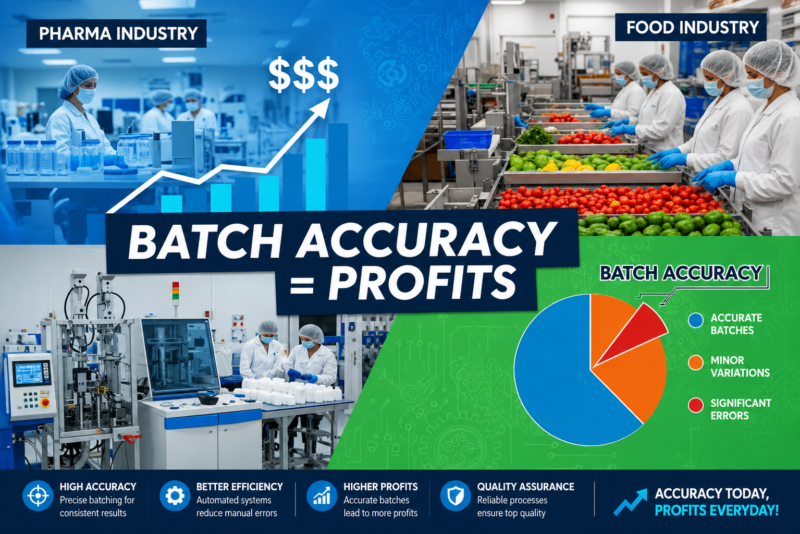
Why Batch Accuracy = Higher Profits in Pharma and Food Industries: An In-Depth Comprehensive Guide

Why Batch Accuracy = Higher Profits in Pharma and Food Industries: An In-Depth Comprehensive Guide

Understanding the True Value of Batch Accuracy

In today’s highly competitive pharmaceutical and food sectors, the difference between profit and loss often boils down to how precisely batches are produced. Batch accuracy refers to the exact adherence to a predefined recipe or formula for each batch of product — whether it is a pill, syrup, snack, or beverage.

Inaccuracies can lead to regulatory non-compliance, product recalls, waste, customer dissatisfaction, and ultimately, financial losses. Conversely, achieving high batch accuracy results in better product quality, regulatory adherence, cost-efficiency, and increased profitability.

This guide explores why batch accuracy is indispensable, the challenges faced, technologies used, and how it translates into higher profits.

Batch accuracy means:

  • Exact measurement of ingredients (quantity, quality, order)
  • Consistent process parameters (temperature, mixing time, humidity)
  • Uniformity in the final product (texture, potency, taste)
  • Documentation and traceability for every batch

It is not just about weighing; it includes every step from raw material handling to packaging.

Regulatory Landscape and Compliance Pressures

The pharma and food industries are heavily regulated. Authorities like FDA, EMA, WHO, and local food safety agencies mandate:

  • Precise batch documentation
  • Strict adherence to formulations and procedures
  • Traceability of every ingredient and batch
  • Regular audits and inspections

Failure to comply leads to:

  • Heavy fines
  • Forced recalls
  • Production shutdowns
  • Brand damage

Batch accuracy is key to passing audits and maintaining license to operate.

Financial Impact: Cost of Inaccuracy

  • Material Waste: Overuse or underuse of ingredients leads to raw material wastage or inferior product quality.
  • Rework & Scrap: Inaccurate batches mean costly reprocessing or disposal.
  • Downtime: Identifying and correcting batch issues cause production halts.
  • Inventory Challenges: Poor batch accuracy disrupts inventory planning causing stockouts or excesses.

These factors inflate operational costs and shrink profit margins.

Quality Assurance and Customer Expectations

Customers in pharma and food sectors demand:

  • Consistent efficacy in medicines
  • Uniform taste and texture in food products
  • Safety and shelf stability

Inconsistent batches lead to consumer complaints, loss of trust, and brand erosion.

Supply Chain and Inventory Optimization

Accurate batch data enables:

  • Just-in-time procurement
  • Reduced inventory carrying costs
  • Better supplier coordination
  • Lower storage and spoilage losses

This streamlines operations and cuts unnecessary expenses.

Reduced Risk of Product Recalls

Recalls can cost millions directly and indirectly. Precise batch control ensures:

  • Each batch meets quality specs
  • Quick identification and isolation of issues
  • Minimized scope of recalls

Enhanced Operational Efficiency

Batch accuracy reduces:

  • Errors during production
  • Need for manual inspections
  • Frequency of quality control failures

Leading to faster production cycles and reduced labor costs.

Optimized Use of Expensive Ingredients

Many pharma ingredients and specialty food additives are costly and sensitive. Accurate batching prevents:

  • Overdosing (waste)
  • Underdosing (subpar product performance)

Faster Regulatory Approvals and Market Entry

Accurate batch records facilitate smoother regulatory submissions and audits, accelerating product launch times.

Human Error and Manual Processes

Manual weighing and recording are prone to mistakes and inconsistencies.

Variability in Raw Materials

Natural ingredients, especially in food, can vary batch to batch, requiring constant adjustment.

Equipment Limitations

Outdated or poorly maintained equipment leads to inaccurate measurements and process controls.

Complex Formulations

Pharma products often have multiple ingredients with tight tolerances, demanding advanced control.

Automated Weighing and Dispensing Systems

  • Use of high-precision load cells and scales
  • Integration with software for real-time feedback
  • Automatic ingredient dispensing with recipe control

Batch Management Software (BMS) and MES (Manufacturing Execution Systems)

  • Digitally records batch data
  • Controls production steps and alerts for deviations
  • Ensures compliance with audit trails

Advanced Mixing and Homogenization Equipment

  • Ensures uniform ingredient distribution
  • Controls parameters like shear rate and temperature

IoT Sensors and Real-Time Monitoring

  • Continuous monitoring of environmental conditions
  • Instant alerts on deviations to prevent batch failures

AI and Machine Learning in Batch Optimization

  • Predicts optimal process parameters based on historical data
  • Enables adaptive control to compensate raw material variability

Pharmaceutical Industry

  • Ensures dosage accuracy critical for efficacy and patient safety
  • Complies with cGMP and FDA regulations reducing risk of sanctions
  • Facilitates serialization and traceability for anti-counterfeiting

Food Industry

  • Maintains taste and texture consistency vital for brand loyalty
  • Reduces allergen contamination risks through precise segregation and cleaning
  • Supports shelf-life optimization by consistent formulation

Case Study 1: Pharma Company Reduces Recall Costs

By integrating automated weighing with batch software, a pharma manufacturer:

  • Reduced batch deviations by 40%
  • Saved over $1 million annually in recall avoidance
  • Cut batch release time by 20%

Case Study 2: Food Manufacturer Boosts Profit Margins

A snack producer implemented IoT-based batch monitoring, resulting in:

  • 15% reduction in ingredient waste
  • Improved product consistency led to 10% higher repeat sales

Reduced quality control labor by 30%

Step 1: Assess Current Batch Process

  • Identify error-prone steps
  • Evaluate equipment precision
  • Audit compliance gaps

Step 2: Invest in Technology

  • Automated weighing and dispensing
  • Integrated batch management software
  • Real-time monitoring sensors

Step 3: Train Staff Thoroughly

  • On equipment use
  • Data entry accuracy
  • Understanding importance of batch accuracy

Step 4: Continuous Monitoring and Improvement

  • Use data analytics for process optimization
  • Regularly calibrate and maintain equipment
  • Implement feedback loops for quality control
  • Accuracy and Precision: Look for systems with tight measurement tolerances
  • Integration Capabilities: Compatible with existing MES and ERP systems
  • User-Friendly Interface: For easy adoption and training
  • Compliance Features: Support for electronic records and audit trails
  • Scalability: Solutions that grow with your production needs
  • Service and Support: Reliable vendor assistance and maintenance

Q1: How does batch accuracy impact regulatory audits?
A1: Accurate batch records and processes ensure smoother audits and reduce the risk of penalties.

Q2: Is manual batching completely obsolete?
A2: While manual batching still exists, automation significantly reduces errors and improves consistency.

Q3: What industries beyond pharma and food benefit from batch accuracy?
A3: Cosmetics, chemicals, and specialty materials industries also gain from accurate batching.

Achieving high batch accuracy is not just a technical goal — it’s a strategic business decision that boosts your profitability, compliance, and customer satisfaction.

Ready to revolutionize your batch production?

  • Contact our experts today for a Free Batch Accuracy Audit
  • Explore cutting-edge solutions customized for your industry
  • Request a demo and see how automation can transform your production line

  • Get Your Free Consultation Now

Batch accuracy is the cornerstone of operational excellence in pharma and food manufacturing. Investing in precise, automated, and monitored batch production systems:

  • Minimizes waste and recalls
  • Improves product quality and consistency
  • Enhances regulatory compliance
  • Drives significant cost savings
  • Increases customer loyalty and market share

Make batch accuracy your competitive advantage and watch your profits soar.